
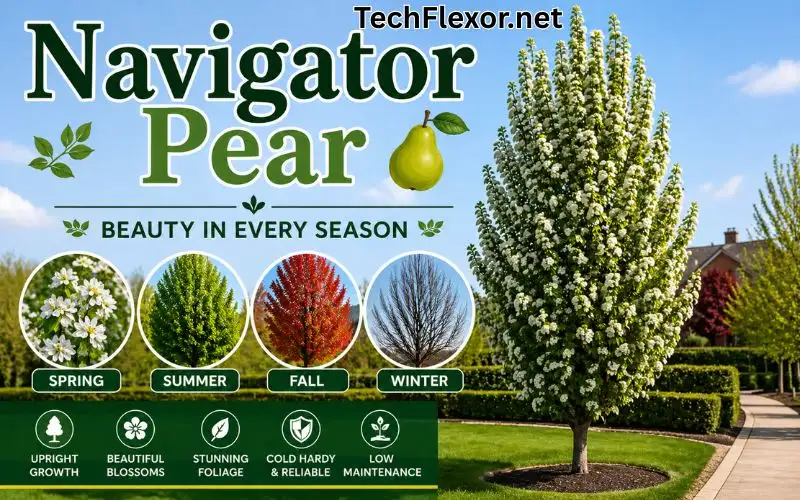
What is the Navigator Pear?
The Navigator Pear stands out as a refined ornamental pear tree known for its neat form and striking beauty. You’ll notice its upright structure and pyramidal growth pattern almost immediately. This narrow pyramidal tree fits tight areas while still creating a bold visual effect. Many homeowners prefer it as a front yard ornamental tree because it stays tidy and elegant. Its tree height and width make it ideal for controlled landscapes without overwhelming space.
In modern yards, the Navigator Pear acts as a reliable landscape ornamental tree with strong visual charm. It works well in narrow space landscaping and adds structure to trees for small gardens. Because it is a non-fruiting pear tree, it avoids mess and maintenance issues. That makes it perfect for clean, polished environments where appearance matters most. Understanding proper root development, similar to buffalo grass root systems, can also help in maintaining soil health around ornamental trees.
Overview of Navigator Pear Tree
The Navigator Pear is a vertical growing tree valued for its compact form and clean lines. It develops dense foliage with glossy green leaves that stay vibrant through the season. This decorative flowering tree creates a calm yet refined look in any yard. Its tidy growth tree nature means you won’t deal with wild branches or uneven shape.
Why Navigator Pear Is Popular in Modern Landscaping
What makes the Navigator Pear appealing is its year-round visual appeal and low upkeep. It suits modern garden tree designs and blends into both urban and suburban spaces. Many designers use it in front yard design ideas because it adds height without crowding. Its clean growth supports low maintenance landscaping goals.
Origin and Development of Navigator Pear
The story of the Navigator Pear begins with careful cultivation aimed at creating a practical ornamental tree. Growers focused on improving shape, resilience, and adaptability. Over time, it evolved into a hardy landscape tree that performs well in different climates. Its climate adaptability makes it suitable across many regions in the United States.
As demand grew, the Navigator Pear gained attention for its pollution tolerant tree qualities. It thrives in cities where other trees struggle. This urban landscape tree became popular for street tree planting and commercial projects. Its steady growth and consistent form helped it gain trust among landscapers.
Background and Cultivation History
Early development focused on improving soil pH tolerance and resistance to harsh weather. Growers aimed to produce cold climate trees that could survive tough winters. The result was a balanced tree with beauty and strength.
How It Became Popular Worldwide
Its rise came from reliability and appearance. Landscapers needed easy care landscape tree options for urban projects. The Navigator Pear met those needs with strong performance and minimal issues.
Botanical Features of Navigator Pear
The Navigator Pear shows a well-defined pyramidal growth pattern that gives it a formal look. Its tree height and width remain controlled, making it perfect for small space trees. This upright ornamental tree grows evenly and maintains its shape without heavy pruning. You’ll notice how it fits neatly into planned landscapes.
Its foliage plays a major role in its beauty. The tree produces heart-shaped leaves that form a dense canopy. During spring, clusters of white spring blossoms appear and create a soft visual effect. Later, the tree transitions into rich autumn foliage colors, showing a stunning seasonal transformation. For deeper botanical understanding, you can explore pear tree species details on Wikipedia.
Tree Size, Shape, and Growth Pattern
This tree grows tall but stays narrow. Its upright structure makes it ideal for property boundary planting. It keeps a balanced form without spreading too wide.
Leaves, Flowers, and Seasonal Changes
From spring flowering tree beauty to fall foliage tree brilliance, it delivers consistent interest. The glossy green leaves add freshness, while autumn colors bring warmth.
Key Characteristics and Unique Features
One striking trait of the Navigator Pear is its ability to provide year-round visual appeal. In spring, it blooms brightly. In summer, it stays lush and green. When fall arrives, the seasonal color tree effect becomes dramatic. This continuous change enhances its aesthetic garden value.
Another advantage is its clean nature. As a non-messy trees option, it avoids fruit drop and reduces maintenance. Its tidy growth tree habit keeps landscapes organized. This makes it a top choice for formal garden trees and structured designs. Maintaining a healthy lifestyle with nutrient-rich foods like powerful superfoods can also complement outdoor living and gardening routines.
Seasonal Appearance (Spring to Winter)
Each season offers something unique. Spring brings blossoms. Summer holds greenery. Fall delivers color. Winter shows its elegant structure.
Ornamental Value and Visual Appeal
Its symmetry supports symmetrical landscape design tree use. It works as a focal point tree in both large and small spaces.
Growing Conditions for Navigator Pear
The Navigator Pear grows best in bright locations with proper sunlight requirements for trees. Full sun helps it develop strong branches and vibrant blooms. Soil must drain well, as soil drainage importance directly affects root health. It adapts to various soil types, showing excellent soil pH tolerance.
This tree also performs well in harsh environments. Its drought tolerance allows survival during dry periods. It thrives in cities due to strong urban pollution tolerance. As one of the most reliable hardy landscape trees, it suits diverse climates.
Sunlight and Soil Requirements
Plenty of sunlight ensures healthy growth. Good soil prevents root problems and supports long-term stability.
Climate Tolerance and Hardiness
It handles cold regions well. This makes it one of the best cold hardy ornamental tree options available.
How to Plant a Navigator Pear Tree
Planting the Navigator Pear correctly ensures long-term success. Start by choosing a location with enough space for its tree height and width. This helps maintain its natural shape. It works well in driveway landscaping tree setups and near walkways.
Proper planting improves root establishment. Dig a wide hole and ensure good drainage. After planting, focus on watering young trees regularly. This step helps roots settle quickly and supports early growth.
Choosing the Right Location
Pick a spot with full sun and open space. Avoid crowded areas to maintain its natural form.
Step-by-Step Planting Process
Plant at the correct depth. Water thoroughly. Add mulch to retain moisture and improve soil health.
Care and Maintenance of Navigator Pear
Caring for the Navigator Pear remains simple compared to many trees. Regular watering young trees helps during early growth stages. Later, the tree becomes more independent. Occasional fertilizing ornamental trees improves overall health and leaf quality.
Pruning is minimal but important. Pruning in late winter helps shape the tree and remove damaged branches. Following basic tree maintenance tips keeps it healthy and attractive. This supports its role as a low maintenance ornamental tree.
Watering and Fertilizing
Consistent watering builds strong roots. Fertilizer supports steady growth and vibrant foliage.
Pruning and General Maintenance
Light pruning keeps its shape clean. Remove weak branches to improve airflow.
Long-Term Care Tips
Monitor soil and water levels. Healthy care ensures long-lasting beauty and stability.
Common Problems, Pests, and Diseases
The Navigator Pear faces fewer issues than many trees. However, poor drainage can affect roots. Paying attention to soil drainage importance helps prevent damage. Proper care reduces most risks.
It also shows resistance to common diseases. This makes it a dependable choice for long-term planting. Its resilience supports its reputation as a practical ornamental tree in demanding environments.
Common Growing Issues
Overwatering can harm roots. Lack of sunlight may reduce flowering.
Pest and Disease Resistance
The tree handles pests well. Its natural strength reduces the need for heavy treatments.
Uses of Navigator Pear in Landscaping
The Navigator Pear plays a strong role in modern design. It works well in narrow space landscaping and enhances formal garden layout styles. Its shape supports structured planting and clean visual lines.
It is often used in property boundary planting or as a focal point tree. Designers also include it in front yard design ideas to create balance. Its flexibility makes it suitable for both residential and commercial landscapes.
Ideal Placement in Gardens and Urban Spaces
It fits perfectly in tight areas. Its upright growth saves space while adding height.
Design Ideas and Practical Uses
Use it in rows or as a centerpiece. It enhances both symmetry and visual depth.
Navigator Pear vs Regular Pear Tree
The Navigator Pear differs from traditional pear trees in purpose and function. While regular trees focus on fruit, this one focuses on design. As a non-fruiting pear tree, it avoids mess and simplifies maintenance.
Its structure also sets it apart. The upright ornamental tree form offers better control and cleaner lines. This makes it ideal for modern landscapes where space and appearance matter.
Key Differences
Regular pear trees spread wide. Navigator stays narrow and structured.
Which One Should You Choose?
Choose Navigator for design. Choose regular pear for fruit production.
Benefits of Growing a Navigator Pear Tree
Growing a Navigator Pear offers both beauty and function. Its aesthetic garden value enhances outdoor spaces instantly. The tree’s form supports organized and elegant landscapes.
It also reduces effort. As a low maintenance ornamental tree, it requires less care. Its clean growth and strong adaptability make it a smart choice for homeowners and designers.
Aesthetic and Practical Advantages
It adds beauty without clutter. Its structure improves landscape balance.
Low Maintenance and Reliability
It grows steadily with minimal care. This makes it a dependable long-term investment.
Conclusion
The Navigator Pear combines elegance, strength, and simplicity in one tree. Its controlled growth, seasonal beauty, and adaptability make it a standout choice. Whether used in small yards or large projects, it delivers consistent value. For anyone seeking a clean and reliable landscape solution, this tree remains an excellent option.
FAQ’s:
Is the Navigator Pear a fruit tree or an ornamental tree?
The Navigator Pear is mainly an ornamental tree grown for its beauty, shape, and seasonal color rather than fruit production.
How tall and wide does a Navigator Pear grow?
It typically grows 20–26 feet tall and about 12–13 feet wide, making it ideal for narrow spaces.
Does the Navigator Pear produce messy fruit?
No, it is a non-fruiting or very low-fruiting tree, so it doesn’t create mess like traditional pear trees.
What hardiness zone is the Navigator Pear suited for?
It grows well in USDA zones 3 to 8, showing strong cold tolerance.
Where should I plant a Navigator Pear tree?
Plant it in a sunny location with enough vertical space, such as front yards, driveways, or along boundaries.
What are the best growing conditions for a Navigator Pear?
It prefers full sun, well-drained soil, and moderate watering for healthy growth.
Is the Navigator Pear good for urban or city areas?
Yes, it tolerates pollution well and is perfect for streets, sidewalks, and urban landscapes.
How fast does a Navigator Pear tree grow, and how long does it live?
It has a moderate growth rate and can live for 15–25 years with proper care.
How do I care for and prune a Navigator Pear tree?
Water young trees regularly, fertilize lightly, and prune in late winter to maintain shape and health.
What problems or diseases affect the Navigator Pear?
It is generally disease-resistant but may face minor issues if overwatered or planted in poorly drained soil.
Learn more about us or contact us to publish your content.